Wednesday, June 13, 2012
Monday, June 11, 2012
current events #1
It Came From the Media: What Prompted the Ruckus About "Pink Slime"? And Is It Unhealthy?
Recently,
news about a certain food product has come to light. "Pink slime"
(which the industry prefers to call "lean finely textured beef") has
caused much ruckus since being shown to the public by the media since early
March. It has been one of the top news stories for quite some time because
citizens are generally concerned about their health. This disturbing term was
derived by Gerald Zimsten, a former USDA scientist, who brought the process of
making this substance to the public's attention. He felt strongly that the USDA
should not be allowed to conceal the use of "pink slime" from the
American public. He has reported that some 70% of this mixture is used in meats
found in grocery stores. This substance is a mixture of fat and meat removed
from a standard meat cut. They are spun through a machine to separate the beef
bits from the fat. This mixture is squeezed through a thin tube and is puffed
with ammonia gas. The gas reacts with the water in the meat to reduce acidity
and kill bacteria. According to the article, this process was started in the
1980s. It wasn't until the 1990s that the ammonia treatment was added due to
safety concerns. This media outburst has prompted fast food chains such as
McDonalds and Safeway to address the media that they will discontinue their use
of "lean finely textured beef."
I
believe that this substance should be properly labeled for what it really is.
Instead of hiding ingredients from the consumers like most companies do, they
should label the packages and tell us what we are about to eat. In schools,
children should be told that their beef is really a slime consisting of
connective tissue, ammonia, and added trimmings. At fast food restaurants, customers should be
told that their beef patty only has a small percentage of actual beef. In
grocery stores, shoppers should be told that the chop meat they are about to
buy has ingredients not labeled on the package. The public has a right to know
what they are consuming. Although regular beef has a higher fat content than
treated beef, it does not make it any better for us. Who knows, maybe people
will continue to choose treated beef over untreated beef, because it is cheaper
in stores. In conclusion, I think that the biggest issue with this topic is the
transparency of it. Our government should not be allowing private industries to
hide additives from the consumer. As people, we have a right to know what we
are putting into our bodies, period.
Article
Title: "It Came From the Media: What Prompted the Ruckus About "Pink Slime"? And Is It Unhealthy?"
Author: Deborah Blum
Publishing Date: March 23, 2012
Website: Discovery Magazine
Image link
Thursday, June 7, 2012
Current events #3
The Brain Hidden Epidemic: Tapeworms Living Inside People's Brains
If you suddenly become partially blind, aren’t able to walk
in a straight line, or fall into a coma would you wonder why? If you found out
that this was caused by tapeworms, how would you react? Don’t tapeworms live in
people’s intestines, not in the brain? Apparently, tapeworms can live in the
brain. And the disease is called Neurocysticercosis. Theodore Nash, who works at a clinic in Maryland, has seen many cases
where tapeworms living in the brain can cause major issues, like seizures,
comas, and cases where patients become paralyzed in parts of their body. Many
people think this is caused by tumors, but really it is caused by tapeworms,
and most people don’t know enough about this topic to recognize what their
issues are caused by. Nash says it is hard to estimate just how many people
have this disease, because it is so easily mistaken for a variety of brain
disorders. Nash has been studying places all over the world, and he recognized
that in certain areas are more popular for contracting tapeworms. Says Nash, “‘Neurocysticercosis is a very
important disease worldwide.”’ Although it was
only recently that Neurocysticercosis was brought to the attention of the public, this issue has been going
on for a long time now, dating back into the 1900’s, slipping by unnoticed.
Tapeworm in the brain is most likely caused by eating undercooked pork, which
is necessary for the tapeworm to complete its journey.
Article title: "The Brain Hidden Epidemic:Tapeworm's Living Inside People's Brain's"
Article written by: Carl Zimmer
Publish date: May 15, 2012
Thursday, May 31, 2012
Wednesday, May 9, 2012
current events #2
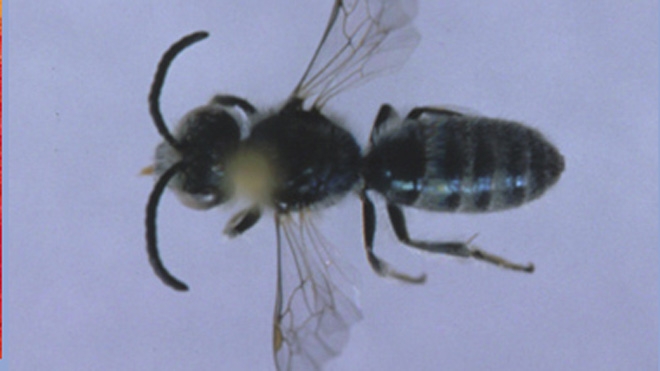
Bees That
Drink Sweat From People’s Skin and Tears From People’s Eyes
Written by Sarah Zang
Urban sweat bees
have suddenly become more and more noticed for their unique way of getting
nutrients. After a recent entry in the Wall
Street Journal, this new species was noticed for its odd behavior. Found in
the heart of Brooklyn, they have been around for awhile, going unnoticed. These
urban sweat bees (Lasioglossum
gotham) are fairly common and unnoticeable, because
they are very tiny and they don’t sting. Many people just don’t notice these bees,
which is why they are not seen as a big threat. Scientists have discovered different
species of sweat bees in Thailand and have found that when using food items as
bait, these bees did not respond well either. When they used themselves as open
bait, the bees reacted differently; liking the nutrients they got from humans
the most. The results were captivating to many, either scaring or intriguing them.
In a detailed conclusion, a statement was made by scientists that said, “On landing, automatic blinking with the eye often prevented
the bee from getting a firm hold, causing it to fall off the eyelashes. If so,
the bee persistently tried again and again until it was successful, or finally
gave up and flew off. In a very few cases the approach was so gentle that the
host did not realize they had a sweat bee attached to their lid,
imbibing their tears. After landing and whilst sucking tears, the scientists often
could barely feel the presence of a bee; indeed, checking by mirror was then
required to make sure whether it was still there or had left. However, when
several bees were involved, the experience was rather unpleasant, causing
strong tear flow. Once a bee had settled and more were approaching, these
tended to settle near each other in a row. Closing the eye did not necessarily
dislodge bees but some continued to suck at the slit. They were even able to
find and settle at closed eyes.” It was hypothesized that bees use human tears
as a primary protein source, though salt may be part of this appeal. “Most people never notice these tiny insects,” says
the WSJ.
I feel that there should be something done to control
these bees. If it was a known fact that this type of bee existed in Brooklyn,
something should have been done to stop this bee. Drinking sweat and sucking
tears is not attractive, and it is not something humans should have to
tolerate. The actions of these bees are disturbing, frightful, and it gives you
chills to think about. Nobody should have to fear a bees sucking out their
tears as they simply walk through Brooklyn. More action should have been done
to prevent these bees from continuing what they are doing. If these bees were a
species known by scientists, why wasn’t something done to stop these bees? No
matter how tiny and how unnoticeable, these bees do suck the tears from people’s
eyes, and that is just unacceptable.
Picture of human eye with sweat bee: http://blogs.discovermagazine.com/80beats/2012/05/01/bees-that-drink-sweat-from-peoples-skin-and-tears-from-peoples-eyes/
Picture of sweat bee: http://mattbille.blogspot.com/2012/04/new-american-species-of-bee.
Article: Bees That Drink Sweat From People's Skin and Tears From People's Eyes
Author: Sarah Zang for Discover Magazine
Sunday, February 26, 2012
States of Matter Lab Report
From the two candle labs we conducted in class, much information was learned. In the first lab, there was an example of physical and chemical properties and changes and it helped us better understand them. By observing an unlit candle, it was easy to describe physical properties such as looks or appearance. Since the candle was still unlit, there were no chemical properties seen. After the candle was lit, immediate changes were easily noticed, both physically and chemically. Since these were noticed after adding fire to the candle, these were classified as physical and chemical changes. Common changes described were things such as the candle melting, the wick turning black, smoke being produced, and the candle burning. It was also realized that in order to observe a chemical property of the candle, it must be lit on fire. This lab helped distinguish physical and chemical properties and the difference between a physical and chemical change. By taking a small birthday candle and adding a flame to it, students were able to clearly see and understand the simple scientific concept of classifying physical and chemical properties and changes. Skills learned were to be able to tell physical and chemical properties apart, keeping in mind their definitions. This lab helps people in real life because when things are occurring in the world around them, like water evaporating, baking a cake, or rust forming on metal, they will be able to classify them and better understand what certain things caused this reaction to take place. Below, see the comparison between before and after the flame was lit.
In the second lab, carbon dioxide being able to put out a flame was being observed. In this lab, a candle was lit on fire and was able to burn. By mixing baking soda with vinegar, carbon dioxide was formed (shown below). This is an example of a chemical change, because a new substance was formed.
| Baking soda and vinegar form carbon dioxide when mixed |
After following lab instructions, it was learned that tipping carbon dioxide gas over a flame would cause the flame to extinguish. It was concluded that this was because carbon dioxide smothers the oxygen from the candle, so the flame is unable to burn. Carbon dioxide does this because it is heavier than air. This lab taught us the skills to observe details closely, measure precisely, and be extremely careful to follow lab instructions. It showed us chemical changes that occurred. This can be applied to real life because it is known that carbon dioxide is heavier than air, so carbon dioxide could be used to put out grease and electrical fires, which cannot be contained with just water. The carbon dioxide would blanket the fire. It could also be used in making carbonated soft drinks, which use carbonated water to cause fizz. Carbon dioxide could also be used in the form of dry ice, to cause fog in movies, or used to chill perishable foods during transport.
Monday, January 9, 2012
Separating a Mixture (Revised)
1) Pick out obvious objects such as toothpicks and toy fly from plastic cup. Set aside on tray.
2) Using spoon, scoop out beans from plastic cup and leave them on tray.
3) Use blue magnet and slowly circulate over bottom of plastic cup to remove black substance. Leave substance on magnet.
4) Use funnel to pour liquid mixed with sand from plastic cup into graduated cylinder.
5) Fold filter paper into area of funnel.
6) Pour sand and liquid mixture from graduated cylinder through funnel, into beaker. Leave the sand in the funnel.
7) Turn hot plate on. Place beaker containing the liquid on hot plate and wait for mixture to boil.
8) Unplug hotplate and remove beaker using tongs. Leave beaker on table.
9) Examine each substance closely and determine what they are.
10) Wash each material used using soap and water. Dry and place back on tray.
11) Clean work area by washing and drying materials used and disposing properly of each substance. Reset work area for next group.
Separating a Mixture
1) 1) Pick out obvious objects such as toothpicks and toy fly from plastic cup. Set aside on tray.
2) 2) Using spoon, scoop out beans from plastic cup and leave them on tray.
3) 3) Use blue magnet and slowly circulate over bottom of plastic cup to remove black substance. Leave substance on magnet.
4) 4) Use funnel to pour liquid mixed with sand from plastic cup into graduated cylinder.
5) 5) Fold filter paper into area of funnel.
6) 6) Pour sand and liquid mixture from graduated cylinder through funnel, into beaker. Leave the sand in the funnel.
7) 7) Turn hot plate on. Place beaker containing the liquid on hot plate and wait for mixture to boil.
8) 8) Unplug hotplate and remove beaker using tongs. Leave beaker on table.
9) 9) Examine each substance closely and determine what they are.
10 10) Wash each material used using soap and water. Dry and place back on tray.
11 11) Clean work area by washing and drying materials used and disposing properly of each substance. Reset work area for next group.
Saturday, January 7, 2012
Extra Credit
~George Washington Carver
Personally, I agree with this statement. Many things in life are acquired by having a strong education, and "unlocking the golden door of freedom" can be added to this list. Education leads to freedom, quite frankly. If you didn't have an education, you would not make the same choices you make in your life. An education gives you the ability to make smart, reasonable, and responsible decisions. You know how to do so many things, all thanks to the education you were given. These things that you were taught has opened so many possibilities, and you may not have even known it. An education is a privilege, and what you choose to do with it can make all the difference. The best example of this is the man that once said this statement, George Washington Carver. His education led him to end his slavery and become a chemist, educator, and horticulturist. His education led to his freedom. The more you know, the better your decisions, the more freedom, because making good decisions gives you freedom to do what is right for you. Any education is beneficial, and freedom would not be possible without it.
Sunday, December 18, 2011
Frog Dissection
On Tuesday and Wednesday we had the unique opportunity to dissect frogs in our class lab groups, and boy, what an experience it was! After making sure we understood the instructions, we jumped right in! The first day we didn't do much, except for cutting through the skin and muscle on the ventral side. Once we did, it opened a door to reveal all of the organs, and of course-tons of preservatives! On a side note~the frogs didn't smell half as bad as I thought they would. Not that they didn't smell bad at all, because believe me, they did, but the stench was still bearable, a definite plus. Once we cut through, this is what our frog (which we named Crystal) looked like (see picture one). To prepare for the next day, we took out Crystal's eggs (because she was female). They were very small, black, and round. There were way more eggs than I thought there would be! There must have been hundreds of them all sitting there, spread across the entire frog! The fat bodies really did look like spaghetti, just like our packet said.
On the second day we discussed all of the organs on the packet we got and described their functions. As we watched Mrs. Rousseau dissect the frog, I was able to clearly see each organ and where it was located (Thanks Mrs. Rousseau-you're the best!). When it was our turn to dissect, my group first thought that the liver was the lungs, and we were surprised to find out that it was not. Who would have known that the liver was the largest organ in the frog's body? Once we pinned the skin to the side the organs looked like this:
It was fun looking at each organ and being able to identify it. The frogs have similar organs to humans, so I found it interesting to compare. For example, even though frogs and humans both have a gall bladder, the frog's looks like a giant green booger (there is really no other way to describe it). Labeling the organs in a diagram on paper further enhanced our knowledge of their placement. Overall, dissecting a frog allowed us to compare ourselves with frogs and determine the different life systems in a frog (And we got to have a blast while doing it! Thanks Crystal!)
While writing this I came across websites that added to my understanding, or gave me a chance to do a virtual dissection, so I decided to share:
http://www.hoala.org/marine%20biology/frog%20dissection.html
http://frog.edschool.virginia.edu/Frog2/home.html
http://froggy.lbl.gov/cgi-bin/dissect?engl
Or if you are daring enough, take the quiz:
http://biology.about.com/library/weekly/bl1qfrog.htm
| : |
| Our frog after cutting through the skin and muscle |
![]() |
| Fat bodies |
On the second day we discussed all of the organs on the packet we got and described their functions. As we watched Mrs. Rousseau dissect the frog, I was able to clearly see each organ and where it was located (Thanks Mrs. Rousseau-you're the best!). When it was our turn to dissect, my group first thought that the liver was the lungs, and we were surprised to find out that it was not. Who would have known that the liver was the largest organ in the frog's body? Once we pinned the skin to the side the organs looked like this:
While writing this I came across websites that added to my understanding, or gave me a chance to do a virtual dissection, so I decided to share:
http://www.hoala.org/marine%20biology/frog%20dissection.html
http://frog.edschool.virginia.edu/Frog2/home.html
http://froggy.lbl.gov/cgi-bin/dissect?engl
Or if you are daring enough, take the quiz:
http://biology.about.com/library/weekly/bl1qfrog.htm
Tuesday, November 8, 2011
As the Stomach Churns
On November 7th and November 8th we worked in small lab groups to conduct an experiment to see how our stomach works when digesting foods. We investigated how acidic conditions affect protein digestion. Through this lab we were able to see how hydrochloric acid functions in order to digest proteins. Through our data chart we noted the appearance of the contents in our test tubes, and what reaction the contents had when placed on Litmus paper. We came to the conclusion that hydrochloric acid breaks down the proteins, and that it has a very low, acidic pH level. We also discussed the different pH levels, acidic, alkaline, and neutral.
Sunday, October 23, 2011
Chicken Wing Dissection
On Thursday, October 20th we observed a chicken wing being dissected in class. We were able to identify different types of tissues and identify the organs. During class we were able to make connections on how we were similar to the wing, and how we were different. Because the wing dissection was put up on the smart board, we were clearly able to see the color, texture, and what tissue each part of the wing was connected to. The chicken wing anatomy activities also helped us to fully understand what we saw.
Sunday, October 16, 2011
Diffusion lab
On Tuesday, October 11th we conducted an in-class experiment to demonstrate the process of diffusion and osmosis and how the iodine molecules were able to go through the selectively permeable membrane to turn the corn starch purple. The purpose of this lab was to see how a cell membrane functioned, being selectively permeable and allowing certain molecules to go through it. The materials used were able to effectively show the process of diffusion and osmosis. Common predictions made were about what would happen if the baggie was permeable to certain materials. An example of one prediction made was that the iodine used would move out of the bag if it were permeable to starch. Another prediction was about what color certain solutions in the baggie and beaker would turn. During this lab, we tried to figure out which area, the baggie or beaker was hypertonic, (higher concentration) and which was hypotonic (lower concentration) We also tried to notice what substance would be the indicator, making a distinguishing change, and what substance would dilute (make less concentrated) the iodine mixture in the beaker. One thing noticed was that after the diffusion and osmosis occurred, the solute concentrations were isotonic, or equal in solute concentrations.
This lab proved that while the iodine molecules went from a higher concentrated area in the beaker to a lower concentrated area in the baggie that the iodine proved to be the indicator, because the corn starch in the baggie turned a shade of purple when combined with the iodine, or indicator. This lab also showed that adding more water to a concentrated area such as the one in the baggie will dilute it, or make it less concentrated, turning the solution in the baggie a lighter color due to it being diluted. It also showed that the iodine moved. This was determined by the starch turning purple when in contact with iodine. We were also able to see which substances the plastic baggie was permeable to, which was iodine.
The process of diffusion and osmosis can be related to everyday occurrences. For example, the most popular process of diffusion would be with tea. When a tea bag is placed in a cup of water, the water turns a different color due to the insides of the tea bag diffusing throughout and giving it color and taste. A second example would be a helium balloon. On the first day the balloon is full of helium and floats in the air. As the days go on, the balloon slowly loses its helium and falls to the ground. By doing this, the concentration becomes equal on both sides. One example of osmosis is putting a limp vegetable in water. Through the process of osmosis the limp vegetable is revived because the water is reentering the vegetable through the process of osmosis. Another example is leaving your hands in dishwater for a long period of time. Although the skin looks shriveled it is actually just bloated, due to osmosis.
Tuesday, October 11, 2011
Diffusion Lab
Today in science class we worked on a diffusion lab. We used corn starch, water, and iodine to help us learn. The purpose of our diffusion lab was to be able to recognize the process of diffusion and osmosis. We also discussed permeable membranes to answer why our results occurred. In class, we were able to define key terms such as diffusion, osmosis, and indicators. We recognized what role each part of our lab had to do with our finished product. Publish Post
Subscribe to:
Comments (Atom)