Thursday, May 31, 2012

Wednesday, May 9, 2012
current events #2
Bees That
Drink Sweat From People’s Skin and Tears From People’s Eyes
Written by Sarah Zang
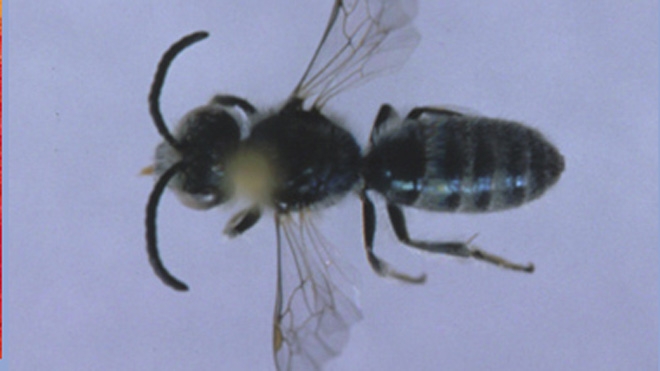

Urban sweat bees
have suddenly become more and more noticed for their unique way of getting
nutrients. After a recent entry in the Wall
Street Journal, this new species was noticed for its odd behavior. Found in
the heart of Brooklyn, they have been around for awhile, going unnoticed. These
urban sweat bees (Lasioglossum
gotham) are fairly common and unnoticeable, because
they are very tiny and they don’t sting. Many people just don’t notice these bees,
which is why they are not seen as a big threat. Scientists have discovered different
species of sweat bees in Thailand and have found that when using food items as
bait, these bees did not respond well either. When they used themselves as open
bait, the bees reacted differently; liking the nutrients they got from humans
the most. The results were captivating to many, either scaring or intriguing them.
In a detailed conclusion, a statement was made by scientists that said, “On landing, automatic blinking with the eye often prevented
the bee from getting a firm hold, causing it to fall off the eyelashes. If so,
the bee persistently tried again and again until it was successful, or finally
gave up and flew off. In a very few cases the approach was so gentle that the
host did not realize they had a sweat bee attached to their lid,
imbibing their tears. After landing and whilst sucking tears, the scientists often
could barely feel the presence of a bee; indeed, checking by mirror was then
required to make sure whether it was still there or had left. However, when
several bees were involved, the experience was rather unpleasant, causing
strong tear flow. Once a bee had settled and more were approaching, these
tended to settle near each other in a row. Closing the eye did not necessarily
dislodge bees but some continued to suck at the slit. They were even able to
find and settle at closed eyes.” It was hypothesized that bees use human tears
as a primary protein source, though salt may be part of this appeal. “Most people never notice these tiny insects,” says
the WSJ.
I feel that there should be something done to control
these bees. If it was a known fact that this type of bee existed in Brooklyn,
something should have been done to stop this bee. Drinking sweat and sucking
tears is not attractive, and it is not something humans should have to
tolerate. The actions of these bees are disturbing, frightful, and it gives you
chills to think about. Nobody should have to fear a bees sucking out their
tears as they simply walk through Brooklyn. More action should have been done
to prevent these bees from continuing what they are doing. If these bees were a
species known by scientists, why wasn’t something done to stop these bees? No
matter how tiny and how unnoticeable, these bees do suck the tears from people’s
eyes, and that is just unacceptable.
Picture of human eye with sweat bee: http://blogs.discovermagazine.com/80beats/2012/05/01/bees-that-drink-sweat-from-peoples-skin-and-tears-from-peoples-eyes/
Picture of sweat bee: http://mattbille.blogspot.com/2012/04/new-american-species-of-bee.
Article: Bees That Drink Sweat From People's Skin and Tears From People's Eyes
Author: Sarah Zang for Discover Magazine
Sunday, February 26, 2012
States of Matter Lab Report
From the two candle labs we conducted in class, much information was learned. In the first lab, there was an example of physical and chemical properties and changes and it helped us better understand them. By observing an unlit candle, it was easy to describe physical properties such as looks or appearance. Since the candle was still unlit, there were no chemical properties seen. After the candle was lit, immediate changes were easily noticed, both physically and chemically. Since these were noticed after adding fire to the candle, these were classified as physical and chemical changes. Common changes described were things such as the candle melting, the wick turning black, smoke being produced, and the candle burning. It was also realized that in order to observe a chemical property of the candle, it must be lit on fire. This lab helped distinguish physical and chemical properties and the difference between a physical and chemical change. By taking a small birthday candle and adding a flame to it, students were able to clearly see and understand the simple scientific concept of classifying physical and chemical properties and changes. Skills learned were to be able to tell physical and chemical properties apart, keeping in mind their definitions. This lab helps people in real life because when things are occurring in the world around them, like water evaporating, baking a cake, or rust forming on metal, they will be able to classify them and better understand what certain things caused this reaction to take place. Below, see the comparison between before and after the flame was lit.


In the second lab, carbon dioxide being able to put out a flame was being observed. In this lab, a candle was lit on fire and was able to burn. By mixing baking soda with vinegar, carbon dioxide was formed (shown below). This is an example of a chemical change, because a new substance was formed.
 |
| Baking soda and vinegar form carbon dioxide when mixed |
After following lab instructions, it was learned that tipping carbon dioxide gas over a flame would cause the flame to extinguish. It was concluded that this was because carbon dioxide smothers the oxygen from the candle, so the flame is unable to burn. Carbon dioxide does this because it is heavier than air. This lab taught us the skills to observe details closely, measure precisely, and be extremely careful to follow lab instructions. It showed us chemical changes that occurred. This can be applied to real life because it is known that carbon dioxide is heavier than air, so carbon dioxide could be used to put out grease and electrical fires, which cannot be contained with just water. The carbon dioxide would blanket the fire. It could also be used in making carbonated soft drinks, which use carbonated water to cause fizz. Carbon dioxide could also be used in the form of dry ice, to cause fog in movies, or used to chill perishable foods during transport.
Monday, January 9, 2012
Separating a Mixture (Revised)
1) Pick out obvious objects such as toothpicks and toy fly from plastic cup. Set aside on tray.
2) Using spoon, scoop out beans from plastic cup and leave them on tray.
3) Use blue magnet and slowly circulate over bottom of plastic cup to remove black substance. Leave substance on magnet.
4) Use funnel to pour liquid mixed with sand from plastic cup into graduated cylinder.
5) Fold filter paper into area of funnel.
6) Pour sand and liquid mixture from graduated cylinder through funnel, into beaker. Leave the sand in the funnel.
7) Turn hot plate on. Place beaker containing the liquid on hot plate and wait for mixture to boil.
8) Unplug hotplate and remove beaker using tongs. Leave beaker on table.
9) Examine each substance closely and determine what they are.
10) Wash each material used using soap and water. Dry and place back on tray.
11) Clean work area by washing and drying materials used and disposing properly of each substance. Reset work area for next group.
Separating a Mixture
1) 1) Pick out obvious objects such as toothpicks and toy fly from plastic cup. Set aside on tray.
2) 2) Using spoon, scoop out beans from plastic cup and leave them on tray.
3) 3) Use blue magnet and slowly circulate over bottom of plastic cup to remove black substance. Leave substance on magnet.
4) 4) Use funnel to pour liquid mixed with sand from plastic cup into graduated cylinder.
5) 5) Fold filter paper into area of funnel.
6) 6) Pour sand and liquid mixture from graduated cylinder through funnel, into beaker. Leave the sand in the funnel.
7) 7) Turn hot plate on. Place beaker containing the liquid on hot plate and wait for mixture to boil.
8) 8) Unplug hotplate and remove beaker using tongs. Leave beaker on table.
9) 9) Examine each substance closely and determine what they are.
10 10) Wash each material used using soap and water. Dry and place back on tray.
11 11) Clean work area by washing and drying materials used and disposing properly of each substance. Reset work area for next group.
Saturday, January 7, 2012
Extra Credit
~George Washington Carver
Personally, I agree with this statement. Many things in life are acquired by having a strong education, and "unlocking the golden door of freedom" can be added to this list. Education leads to freedom, quite frankly. If you didn't have an education, you would not make the same choices you make in your life. An education gives you the ability to make smart, reasonable, and responsible decisions. You know how to do so many things, all thanks to the education you were given. These things that you were taught has opened so many possibilities, and you may not have even known it. An education is a privilege, and what you choose to do with it can make all the difference. The best example of this is the man that once said this statement, George Washington Carver. His education led him to end his slavery and become a chemist, educator, and horticulturist. His education led to his freedom. The more you know, the better your decisions, the more freedom, because making good decisions gives you freedom to do what is right for you. Any education is beneficial, and freedom would not be possible without it.
Sunday, December 18, 2011
Frog Dissection

: |
| Our frog after cutting through the skin and muscle |
 |
| Fat bodies |
On the second day we discussed all of the organs on the packet we got and described their functions. As we watched Mrs. Rousseau dissect the frog, I was able to clearly see each organ and where it was located (Thanks Mrs. Rousseau-you're the best!). When it was our turn to dissect, my group first thought that the liver was the lungs, and we were surprised to find out that it was not. Who would have known that the liver was the largest organ in the frog's body? Once we pinned the skin to the side the organs looked like this:
 |

While writing this I came across websites that added to my understanding, or gave me a chance to do a virtual dissection, so I decided to share:
http://www.hoala.org/marine%20biology/frog%20dissection.html
http://frog.edschool.virginia.edu/Frog2/home.html
http://froggy.lbl.gov/cgi-bin/dissect?engl
Or if you are daring enough, take the quiz:
http://biology.about.com/library/weekly/bl1qfrog.htm
Subscribe to:
Comments (Atom)